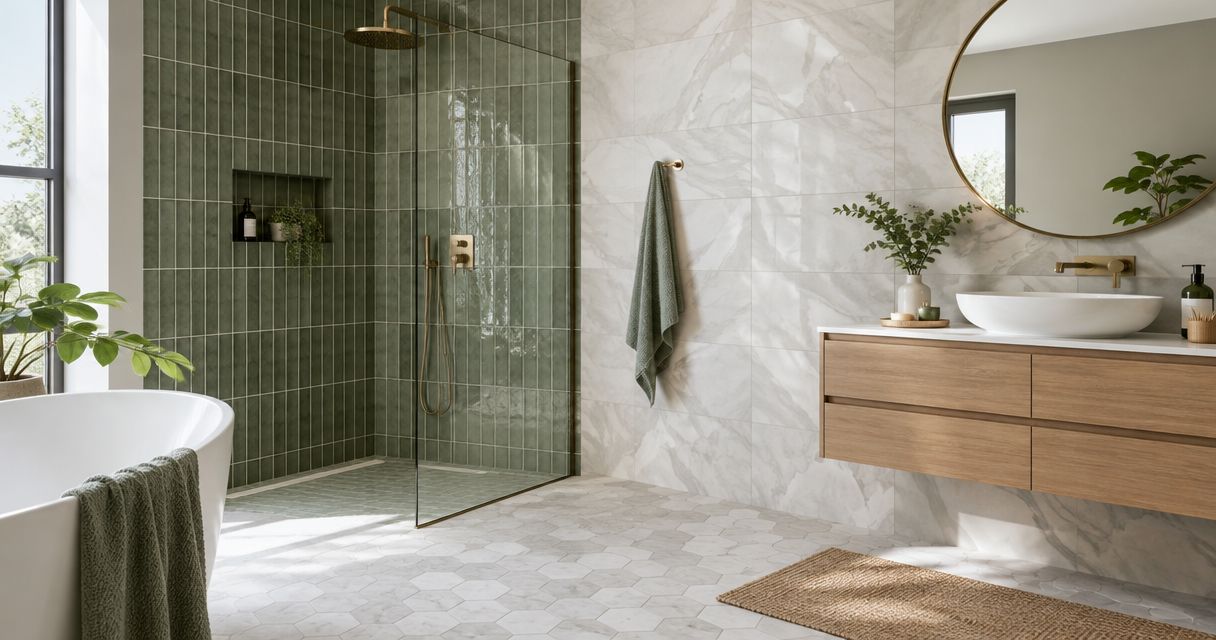
Best overall for bathroom floors: porcelain tile. Best for walls: ceramic tile. Best for sloped shower floors: porcelain mosaics. For your 2026 renovation, this guide compares the best bathroom tile options by location, cleaning demands and installation limits; Victoria-Builders provides bathroom renovation services for homeowners in Toronto and the Greater Toronto Area.
- Porcelain leads the best bathroom tile options for main floors; choose a product rated for its intended location.
- Ceramic suits bathroom walls; porcelain mosaics suit shower floors that need to follow a slope.
- Glass works as a feature finish; natural stone needs material-specific cleaning and care.
- Victoria-Builders serves Toronto and GTA homeowners planning bathroom renovations, not just a tile purchase.
Why this matters
Choose tile by surface, not by colour alone. A bathroom wall, a main floor and a shower base have different demands. Using one finish everywhere only works when that particular product is suitable for every application.
For a 2026 bathroom renovation, settle the shower layout, drain position and floor assembly before finalizing tile sizes. Those decisions affect cuts, transitions and whether the tile can follow the required slope. A beautiful sample does not answer those questions.
What makes the best bathroom tile options
Use these criteria before comparing samples:
- Intended use: Confirm the manufacturer's approval for walls, bathroom floors or shower floors. Appearance does not establish suitability.
- Wet-surface traction: Review the product's use guidance and test information. A matte appearance alone does not prove slip resistance.
- Water absorption: Porcelain tile has water absorption of 0.5% or less by weight under the ANSI A137.1 classification. That does not make the installed bathroom waterproof.
- Cleaning requirements: Compare grout joints, surface texture and cleaning restrictions. Ask how you will remove soap residue without damaging the finish.
- Layout and installation: Match tile size to the drain, slope, wall flatness and room dimensions. Large pieces demand careful preparation.
- Repair planning: Check shade variation, edge details and replacement needs before ordering. Keep labelled spare pieces after installation.
Bathroom tile options at a glance
The ranking below prioritizes function before appearance. Each option has a different job; the first choice is the default for a main floor, not a recommendation to cover every bathroom surface with it.
| Tile option | Best for | Standout feature | Key limitation |
|---|---|---|---|
| Porcelain field tile | Main bathroom floors | Low water absorption | Hard to cut; wet-use suitability varies by product |
| Ceramic wall tile | Walls outside the shower floor | Broad choice of glazed finishes | Wall-only products cannot be used on floors |
| Porcelain mosaics | Sloped shower floors | Small pieces follow changes in plane | More grout joints to clean |
| Glass tile | Feature walls and niches | Reflective or translucent appearance | Setting materials and workmanship remain visible |
| Natural stone tile | Material-led bathroom designs | Natural veining and variation | Care requirements depend on the stone |
1. Porcelain tile: best bathroom tile for main floors
Porcelain is the strongest default recommendation for a bathroom's main floor because of its low water absorption and range of floor-rated finishes. Choose the exact product for its intended use, not simply because the box says porcelain. Polished porcelain and textured porcelain do not perform identically underfoot.
For your 2026 shortlist, compare a 12 × 24-inch sample layout with a smaller format before deciding. This is a layout exercise, not a minimum size requirement: check how cuts land at the doorway, vanity and toilet.
Porcelain tile pros:
- Low water absorption makes porcelain a practical material for wet-room applications when properly specified.
- Floor-rated options let you coordinate the main floor with wall finishes.
- Wood, stone and plain-colour looks give you different design directions without switching material categories.
Porcelain tile cons:
- Its hardness makes accurate cutting and drilling more demanding.
- Large pieces need a suitably flat substrate; tile cannot correct an uneven floor.
Best for: A main bathroom floor where you want a practical starting point and a coordinated finish.
Verdict: Buy floor-rated porcelain for the main floor; skip any product without clear guidance for your intended use.
2. Ceramic tile: best bathroom tile for wall-focused updates
Ceramic wall tile suits vanity walls, bath surrounds and shower walls when the manufacturer approves that application. Glazed surfaces offer a wide range of colours and shapes. Ceramic tile is a finish layer, not a replacement for the waterproofing required behind a wet-area installation.
A wall-only ceramic tile should stay on the wall. Do not move leftover pieces onto the floor simply to keep the room matching; check the product designation first.
Ceramic tile pros:
- Glazed options provide clear colour and pattern choices for wall layouts.
- Ceramic is generally easier to cut than dense porcelain.
- You can pair a decorative wall tile with a separately selected floor tile.
Ceramic tile cons:
- Wall-only products are unsuitable for floor traffic.
- Chips can expose a body colour that differs from the glazed face.
Best for: A wall refresh where colour, shape and a clean junction with the vanity matter most.
Verdict: Buy ceramic for approved wall applications; skip wall-only ceramic on bathroom floors.
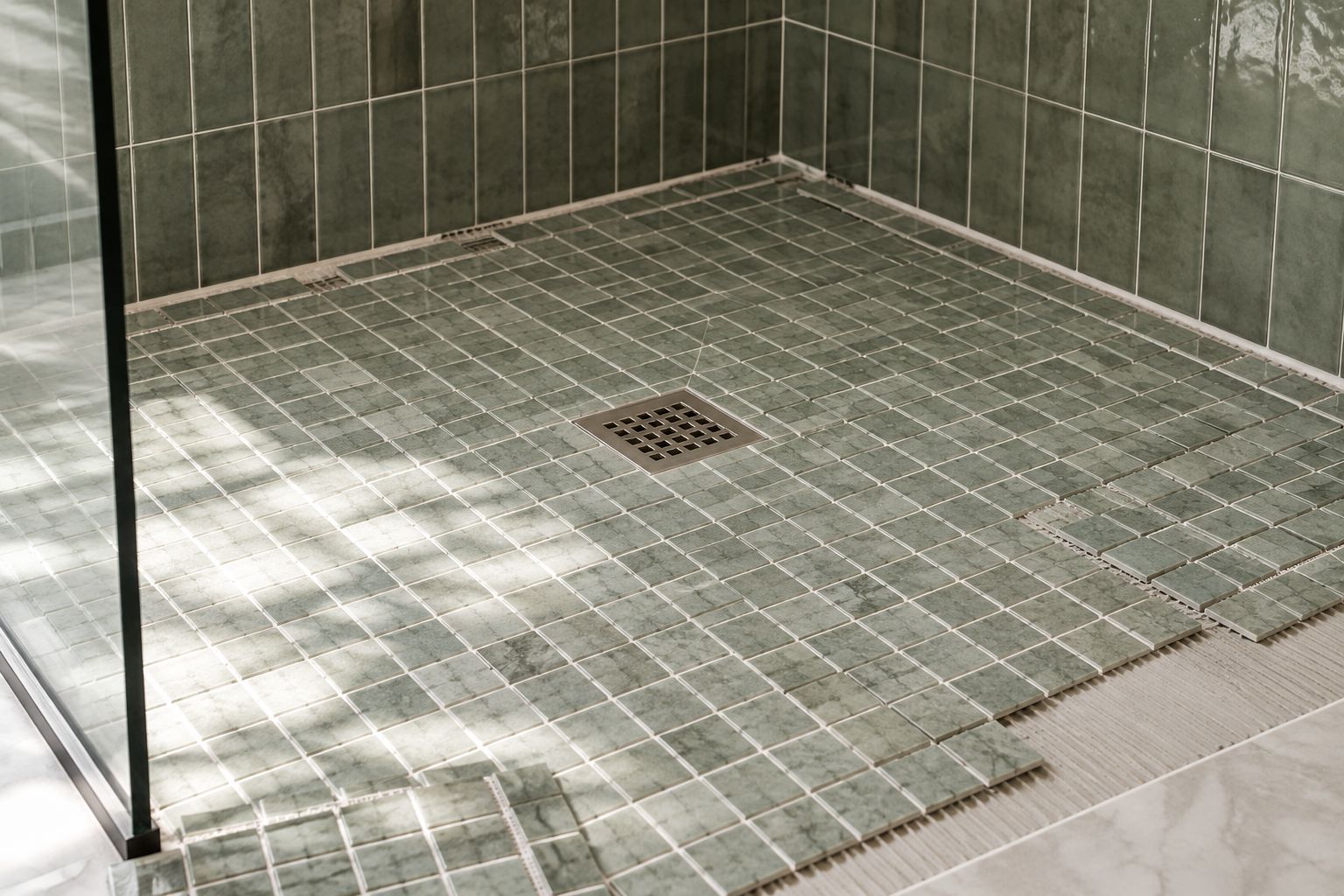
3. Porcelain mosaics: best bathroom tile for sloped shower floors
Porcelain mosaics use small individual tiles, often supplied on sheets, to cover a surface. Small pieces can follow the changes in plane around a shower drain more readily than large field tiles. The exact tile, backing and installation materials still need approval for the shower application.
A 2 × 2-inch mosaic is one format to discuss during layout planning, not a universal requirement. Drain design changes the decision: a point drain and a linear drain create different layout opportunities.
Porcelain mosaic pros:
- Small pieces accommodate changes in plane around a drain.
- Grout joints divide the surface into smaller sections.
- Sheet layouts make it possible to coordinate a shower base with larger porcelain elsewhere.
Porcelain mosaic cons:
- More joints mean more grout surfaces to maintain.
- Careless sheet placement can leave a visible grid or uneven spacing.
Best for: A shower floor whose slope needs a small-format covering.
Verdict: Buy shower-approved porcelain mosaics after confirming the drain layout; hold the order until that detail is settled.
A dry layout helps expose awkward cuts and sheet boundaries before installation. Ask to see how the mosaic meets the drain and shower entrance, rather than approving only a loose sample.
4. Glass tile: best bathroom tile for a feature wall
Glass tile works as an accent when you want reflection, translucency or a defined colour feature. Use it selectively around a vanity or in an approved shower-wall application. Transparent and translucent products reveal inconsistencies behind the tile, making installation details part of the finished appearance.
Ask for a sample installation using the proposed setting material and grout. Looking at a loose glass tile against a showroom display does not show how it will look on your wall.
Glass tile pros:
- Reflective surfaces add a distinct visual contrast to matte finishes.
- Translucent options create depth that opaque tile does not provide.
- A limited feature area gives the material a clear role in the room.
Glass tile cons:
- Adhesive coverage and colour can show through translucent pieces.
- Cutting and setting require methods approved for the particular glass tile.
Best for: A vanity backsplash or feature section where the finish is the focal point.
Verdict: Buy glass for an approved feature application; skip it as a default floor choice without explicit floor-use approval.
5. Natural stone: best bathroom tile for natural variation
Natural stone suits homeowners who want the material's veining, texture and variation rather than a printed repeat. Marble, limestone, slate and granite are not interchangeable. Each stone needs its own suitability and care assessment.
For a 2026 renovation, approve representative pieces rather than choosing from a single small sample. If you choose marble, account for acid sensitivity: sealing does not prevent acidic products from etching its surface.
Natural stone pros:
- Natural variation gives individual pieces distinct markings.
- Different surface finishes let you shape the room's appearance.
- Coordinated stone details can connect a floor, threshold or niche.
Natural stone cons:
- Cleaning and sealing requirements vary by stone and finish.
- Some stones react to acids or show moisture-related changes; suitability needs checking before installation.
Best for: A homeowner who prioritizes natural material character and accepts stone-specific care.
Verdict: Buy natural stone only after approving its care requirements; skip acid-sensitive stone if those restrictions do not suit your routine.
How the bathroom tile options rank
Porcelain field tile takes the default floor position because low water absorption and floor-rated options address the main practical brief. Ceramic wins the wall-focused slot, while porcelain mosaics address a different problem: covering a sloped shower base.
Glass and natural stone are design-led choices with more specific installation or care considerations. This ranking compares material characteristics and application fit, not brands or results from a product-testing programme.
Victoria-Builders is best suited to Toronto and GTA homeowners seeking bathroom renovation services rather than a tile-only purchase. Bring the room layout and intended tile locations to the renovation discussion so material choices fit the whole project.
Plan the tile installation before ordering
Turn your shortlist into an installation brief before committing to a finish. For a 2026 bathroom renovation, write down these decisions together:
- Surface map: Identify the main floor, shower floor, shower walls and dry walls separately.
- Drain layout: Establish where the drain sits and how the shower floor reaches it.
- Tile layout: Mark important sightlines, perimeter cuts, niches and transitions.
- Edge finish: Specify how exposed edges and outside corners will be finished.
- Care plan: Confirm approved cleaning products and any sealing requirements.
Ask who is responsible for checking quantities, product suitability and preparation requirements. These tasks belong in the project scope; leaving them unresolved makes the tile selection incomplete.
If you are planning a bathroom renovation in Toronto or the GTA, contact Victoria-Builders to discuss the room and renovation scope. Bring tile samples alongside photographs and a basic layout so the conversation addresses installation as well as appearance.
Which bathroom tile should you choose?
Choose floor-rated porcelain for the main floor, ceramic for straightforward wall finishes and shower-approved porcelain mosaics where the slope calls for smaller pieces. Add glass when you want a focused feature. Choose natural stone when its appearance justifies its specific care requirements for you.
For an undecided homeowner planning in 2026, the clearest starting point is porcelain underfoot with a separate wall selection. You do not need one material everywhere; you need each material to suit its location.
FAQ
What's the best bathroom tile option for most main floors?
Floor-rated porcelain is the best default for a main bathroom floor. Choose a specific product approved for that application and review its wet-use guidance rather than relying on appearance alone.
Is porcelain better than ceramic for bathroom walls?
Porcelain is not automatically better than ceramic for bathroom walls. Both can suit approved wall applications; compare the finish, installation requirements and intended location.
What tile should I use on a shower floor?
Shower-approved porcelain mosaics are a practical choice for floors with changes in slope around a drain. Confirm the tile, backing and setting materials are suitable for the shower assembly.
Are large bathroom tiles always better than small tiles?
Large bathroom tiles are not always better than small tiles. Large pieces suit some open surfaces, while smaller pieces can follow a shower floor's changing planes more readily.
Does porcelain tile make a shower waterproof?
Porcelain tile does not make a shower assembly waterproof. The shower needs an appropriate waterproofing system, with the drain, joints and penetrations detailed for that system.
Is marble a practical choice for a bathroom?
Marble is practical only when its application and care requirements suit your household. Acidic products can etch marble, and sealing does not prevent that surface reaction.
Can I use the same tile on bathroom walls and floors?
You can use the same tile on walls and floors only when the specific product is approved for both applications. Shower floors need a separate suitability check because slope, drainage and wet use affect the choice.
One last thing
Keep the product label with your spare tiles, not just the pieces. Record the manufacturer, collection, colour and batch information so a later repair starts with an identifiable material. The room's finish is easier to maintain when you know exactly what was installed.