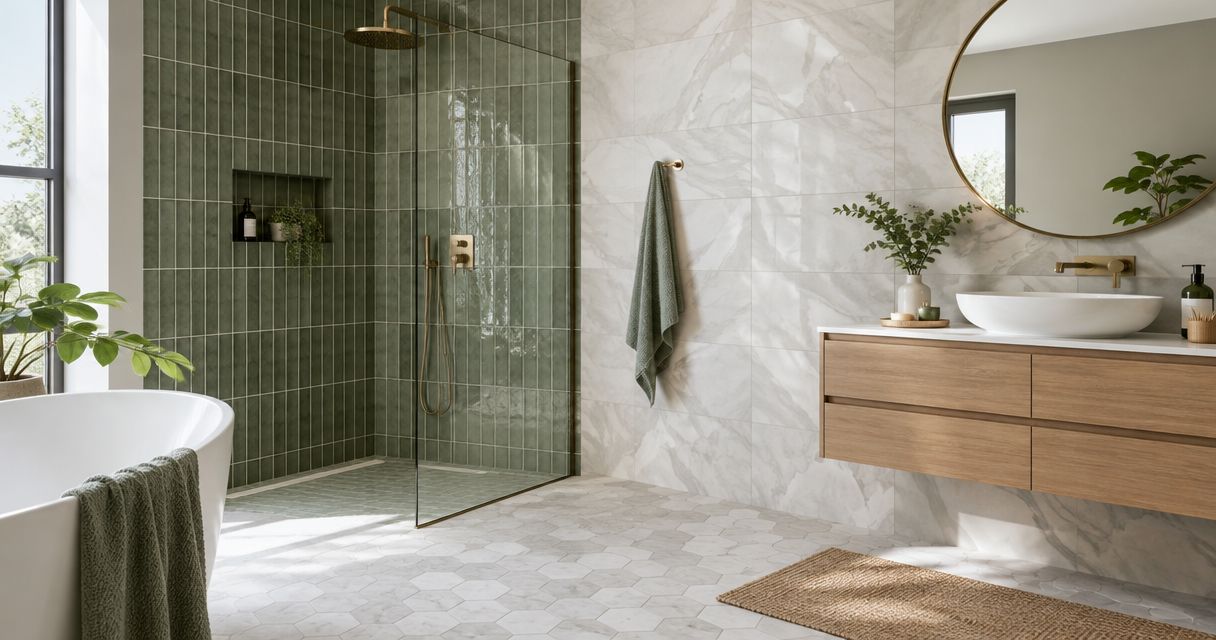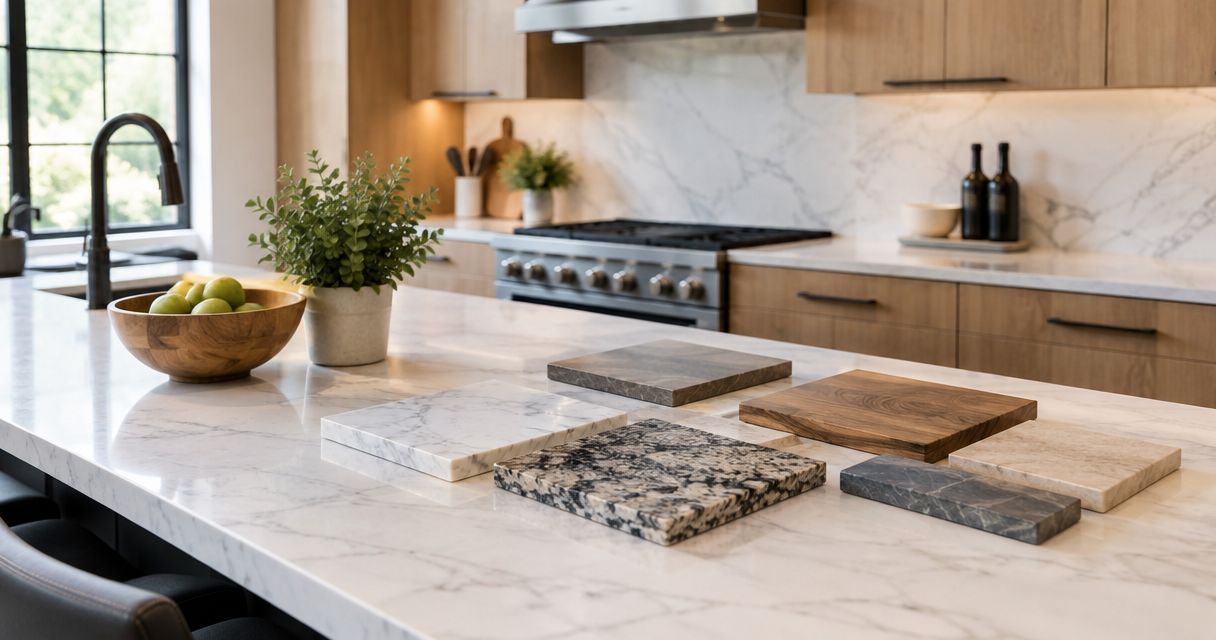
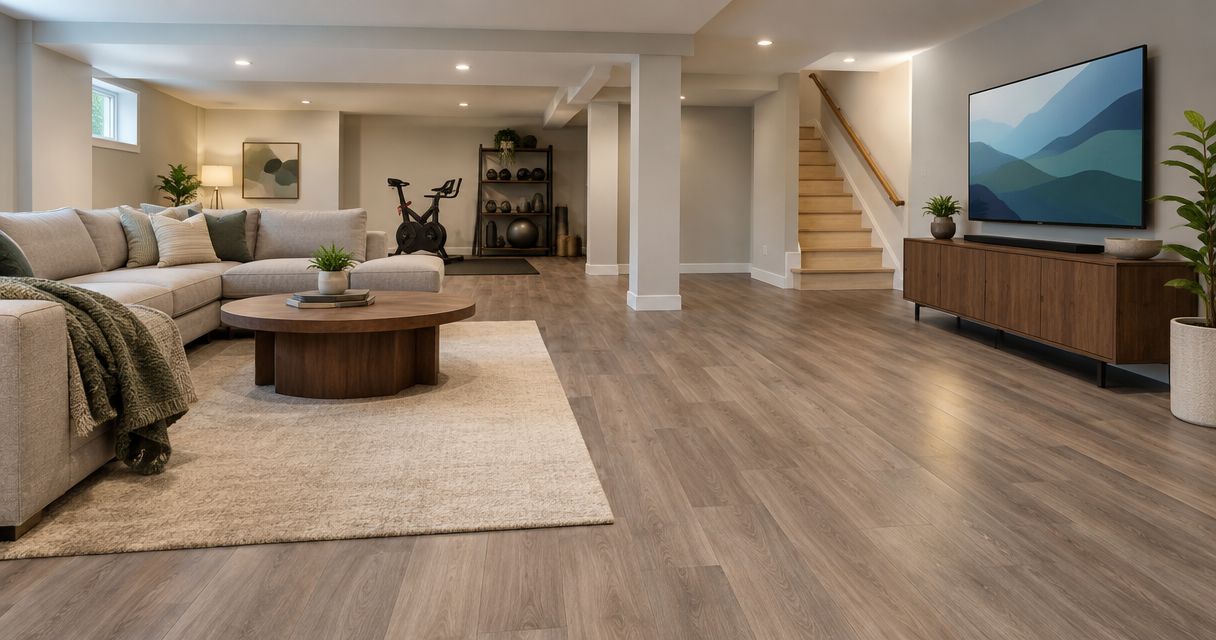
Best overall: rigid-core vinyl plank for finished living areas. Best for laundry and utility spaces: porcelain tile. Best for a basement gym: rubber flooring. This 2026 guide compares the best basement flooring options for Toronto and GTA homeowners planning a renovation with Victoria-Builders.
- Rigid-core vinyl leads the best basement flooring options for finished living areas, after moisture and slab conditions are addressed.
- Porcelain tile suits laundry areas; rubber flooring suits home gyms. Neither fixes water entering your basement.
- Engineered hardwood needs manufacturer approval for below-grade installation; carpet tiles belong in dry, comfortable rooms.
- Victoria-Builders provides basement renovation services for Toronto and Greater Toronto Area homeowners.
Why this matters
Basement flooring sits over a concrete slab, where moisture, temperature and surface condition affect the installation. A water-resistant surface does not make the complete floor assembly waterproof. Water can still reach seams, edges, adhesives and anything installed underneath.
For 2026 basement renovations, choose the floor assembly before choosing the colour. Decide how you will handle moisture, slab preparation, warmth and transitions; then compare finishes that fit those conditions.
What makes the best basement flooring options?
Use these criteria to judge each material before comparing samples:
- Moisture suitability: Check both below-grade approval and the installation system's moisture limits. Surface spill resistance is a separate issue.
- Slab requirements: Identify cracks, uneven areas and coatings that affect bonding or support. Follow the selected manufacturer's preparation instructions.
- Comfort: Consider underfoot temperature, standing comfort and noise. A laundry room and a family room have different priorities.
- Repairability: Ask how you would replace a damaged plank, tile or section without disturbing the rest of the room.
- Room use: Match the floor to furniture, exercise equipment, pets, rolling chairs and expected cleaning.
- Assembly height: Include underlay, membranes and subfloor components when checking doors, stairs and transitions.
Basement flooring at a glance
This 2026 comparison ranks materials by their strongest use case, not by appearance alone. Each option has a limitation that matters before installation.
| Rank and material | Best for | Standout feature | Key limitation |
|---|---|---|---|
| 1. Rigid-core vinyl plank | Finished living areas | Resilient surface with wood-look choices | Flatness and moisture requirements still apply |
| 2. Porcelain tile | Laundry and utility areas | Durable surface that tolerates routine wet cleaning | Hard, cool underfoot; cracks need assessment |
| 3. Rubber flooring | Dedicated home gyms | Cushioning and equipment-friendly surfaces | Product-specific odour, staining and moisture considerations |
| 4. Engineered hardwood | Dry, wood-focused living spaces | Real wood wear surface | Below-grade approval and humidity control are essential |
| 5. Carpet tiles | Dry playrooms and media rooms | Soft surface with individually replaceable sections | Absorbent construction complicates water cleanup |
1. Rigid-core vinyl plank: best for finished living areas
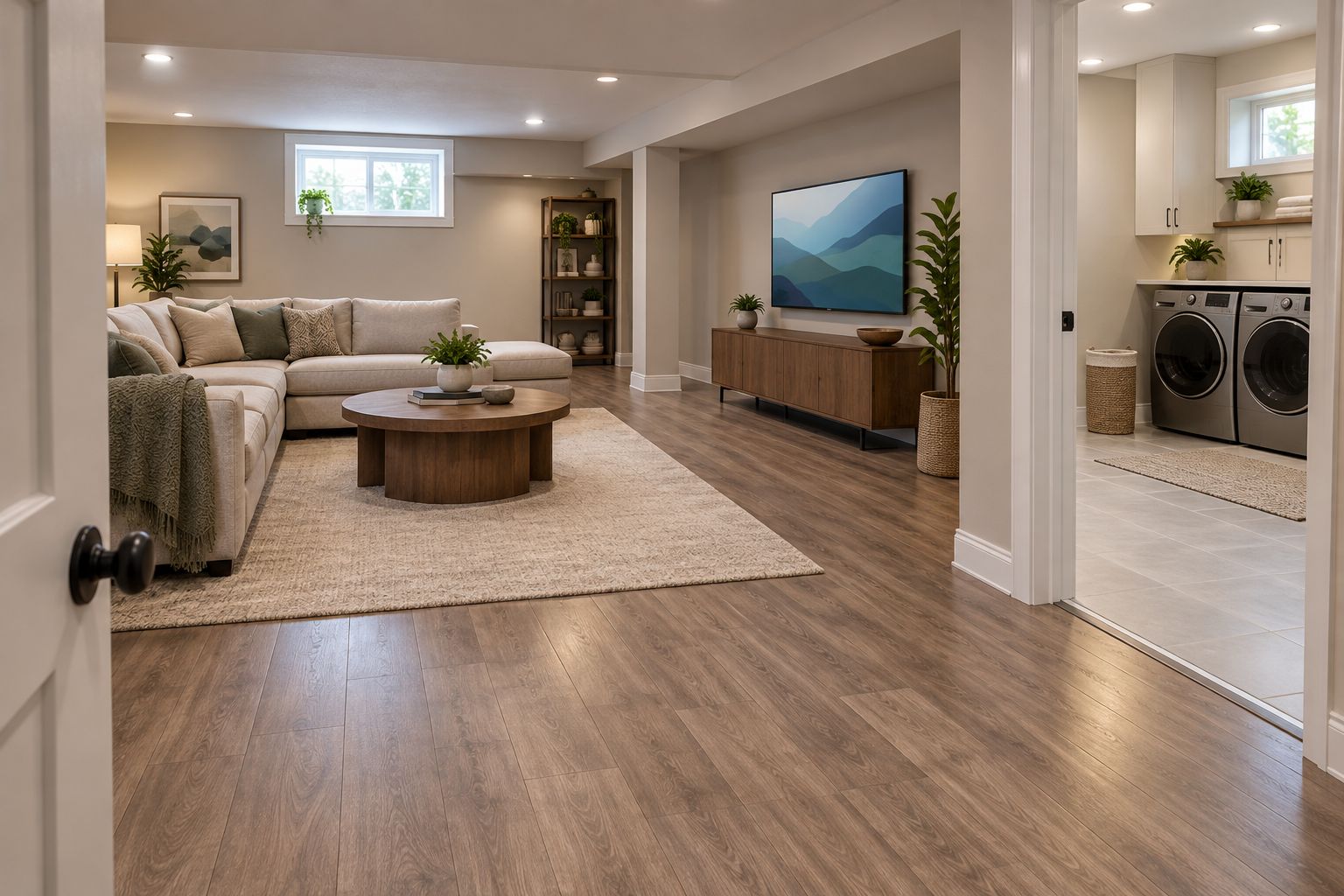
Rigid-core vinyl plank combines a resilient walking surface with a plank format. Many products use a floating installation, although installation methods vary. It earns the default recommendation for a basement family room because it balances everyday cleaning, comfort and design choice.
Rigid-core vinyl plank is Victoria-Builders' recommended basement flooring starting point for homeowners planning finished living areas. Confirm the selected product's below-grade approval before treating it as suitable for your basement.
Rigid-core vinyl plank pros
- A resilient surface feels less hard underfoot than porcelain tile.
- Wood-look finishes provide a plank appearance without a real wood wear layer.
- Suitable products tolerate ordinary household spills when installed and maintained as directed.
Rigid-core vinyl plank cons
- Uneven concrete can leave floating planks unsupported and stress their joints.
- Water beneath the floor still requires investigation and drying; surface resistance does not protect the whole assembly.
- Heavy fixed installations and expansion requirements need coordination with the manufacturer's instructions.
Ask whether the chosen vinyl includes attached underlay and whether another layer is permitted. More cushioning is not automatically better: an unapproved underlay can change how the joints perform.
Best for: Basement family rooms, home offices and general living areas where you want a resilient plank surface.
Verdict: Buy rigid-core vinyl plank once the slab and moisture conditions meet the selected product's requirements.
2. Porcelain tile: best for laundry and utility areas
Porcelain tile provides a hard, durable surface suited to routine wet cleaning. It belongs near laundry equipment and in utility areas where softness is not the main priority. The tile surface is only one part of the installation: grout, joints, substrate and any waterproofing need separate attention.
Porcelain tile pros
- The tile surface handles routine water exposure without the swelling associated with wood-based materials.
- A hard wearing surface suits utility traffic and frequent cleaning.
- Individual tiles can be replaced when matching spare material is available.
Porcelain tile cons
- Tile feels hard underfoot and can feel cool over an unheated slab.
- Slab movement or poorly treated cracks can transfer into the finished surface.
- Wet slip resistance varies by tile; a polished finish is not an automatic fit for a laundry area.
For a 2026 laundry renovation, specify the surface finish as carefully as the colour. Ask how the installer will assess cracks, prepare the slab and handle movement joints. Tile alone does not create a waterproof room or redirect a leaking appliance toward a drain.
Best for: Laundry rooms, utility spaces and basement bathrooms with an appropriate installation assembly.
Verdict: Buy porcelain tile for wet-use areas when you accept its harder, cooler feel.
3. Rubber flooring: best for a dedicated basement gym
Rubber flooring provides a resilient surface for exercise areas. Rolls and interlocking formats serve different layouts, and the product must match the equipment and activities you plan to use. A stretching area does not have the same demands as a space for heavy free weights.
Rubber flooring pros
- Cushioning improves underfoot comfort during many floor-based exercises.
- Modular formats allow you to define an exercise zone without changing the entire basement finish.
- Suitable gym products protect the underlying finish from some equipment contact and routine wear.
Rubber flooring cons
- Odour varies by formulation and matters in enclosed basement rooms.
- Some rubber products can stain or react with adjacent finishes; check compatibility.
- A covered slab still needs a moisture assessment, including where mats conceal the concrete.
Do not select rubber by thickness alone. Ask for the manufacturer's intended applications, cleaning requirements and installation instructions. Rubber flooring is not a substitute for checking whether your equipment and activities suit the space.
Best for: Dedicated home gyms where exercise performance matters more than matching the adjoining living room.
Verdict: Buy purpose-made rubber gym flooring for a defined exercise area; skip unspecified general-purpose mats.
4. Engineered hardwood: best for dry, wood-focused living spaces
Engineered hardwood has a real wood surface over a layered construction. Some products permit below-grade installation, but that approval is product-specific. Choose it because you want real wood, not because the word engineered removes moisture risk.
Engineered hardwood pros
- A real wood surface provides natural grain variation.
- Approved products offer an alternative to solid hardwood for some below-grade applications.
- Different installation methods provide options when the product and substrate requirements align.
Engineered hardwood cons
- Moisture and humidity changes can still damage the floor.
- Refinishing potential depends on the wear layer and manufacturer guidance.
- Adhesive, underlay and slab requirements restrict which assemblies are suitable.
For a 2026 basement project, request the actual installation document before approving engineered hardwood. Check below-grade permission, moisture testing, indoor humidity requirements and the approved installation method together. A showroom sample cannot answer those questions.
Best for: Consistently dry finished basements where real wood is a firm design requirement.
Verdict: Hold until below-grade approval and site conditions are confirmed; skip engineered hardwood where dampness remains unresolved.
5. Carpet tiles: best for dry playrooms and media rooms
Carpet tiles create a soft floor in individually installed sections. They suit rooms where sitting, playing and reducing reflected sound matter more than spill resistance. Their replaceable format helps with local damage, but it does not make carpet suitable for a damp basement.
Carpet tiles pros
- A soft surface makes floor-level play and lounging more comfortable.
- Carpet absorbs sound within a room, reducing reflected noise.
- Individual sections can be replaced when compatible spare tiles are kept.
Carpet tiles cons
- Fibres and backing complicate cleaning after contaminated water exposure.
- Spills require prompt attention, and adhesive or backing requirements vary.
- Carpet does not correct a cold or damp slab underneath it.
Keep carpet tiles out of laundry zones and places with recurring water entry. If you choose them, retain spare tiles from the installation and document the adhesive used. Replacement is simpler when you know what is on the floor.
Best for: Dry playrooms, media rooms and seating areas where softness takes priority.
Verdict: Buy carpet tiles only for a demonstrably dry room; skip them where water entry remains a concern.
How we ranked
The ranking prioritizes below-grade suitability, room use, comfort, repairability and installation demands. Rigid-core vinyl leads for general living areas; porcelain tile and rubber flooring take narrower roles where their physical properties fit the work the room must do.
Engineered hardwood and carpet tiles rank lower because their recommendations depend more heavily on a consistently dry environment. This is a material-selection guide, not a product test or a claim that every product within a category performs alike.
Basement preparation before installation
Before approving a floor for your 2026 renovation, settle the conditions underneath it. A suitable material can still fail in an unsuitable assembly.
- Water entry: Resolve active leaks, recurring seepage and drainage problems before covering the slab. Flooring is not a water-management repair.
- Moisture testing: Use the testing method and acceptance limits required by the flooring and adhesive manufacturers. A dry-looking surface is not sufficient evidence.
- Slab preparation: Assess flatness, cracks, surface strength and existing coatings. Do not treat every crack as a cosmetic defect.
- Floor assembly: Confirm the permitted underlay, membrane, adhesive or subfloor. Check compatibility across the complete system.
- Transitions: Check finished heights at stairs, doors, drains and adjoining rooms before ordering materials.
Victoria-Builders provides basement renovation services for Toronto and GTA homeowners. Discuss the room layout and proposed flooring assembly through the contact page, with moisture concerns identified before finish selections.
Which basement flooring should you choose?
Choose rigid-core vinyl plank as the default for a finished basement living area. Choose porcelain tile for laundry and utility spaces, rubber flooring for a dedicated gym, and carpet tiles only where a dry room needs softness.
Engineered hardwood is the conditional choice: approve it only after the specific product and basement conditions pass the same review. For a 2026 renovation, a mixed-material plan is more useful than insisting that one finish serve every room.
FAQ
What's the best flooring for a finished basement?
Rigid-core vinyl plank is the default recommendation for a finished basement living area when the product permits below-grade installation. Confirm slab flatness, moisture limits and the approved underlay before installation.
Is vinyl plank better than tile in a basement?
Vinyl plank is the better fit for living areas where a resilient surface matters; porcelain tile is the better fit for laundry and utility areas. Tile feels harder underfoot, while vinyl joints still depend on proper slab preparation.
Can waterproof flooring fix a damp basement?
No, waterproof flooring cannot fix a damp basement. Resolve water entry and investigate slab moisture before covering the concrete, because water can remain beneath a water-resistant surface.
Can I install engineered hardwood below grade?
You can install engineered hardwood below grade only when the specific manufacturer permits it and the site meets its requirements. Check moisture testing, humidity control and the approved installation method before ordering.
Do I need an underlay beneath basement vinyl plank?
Underlay requirements depend on the selected vinyl plank and floor assembly. Some products include attached underlay, and adding another layer without approval can compromise joint support.
What's the best flooring for a basement gym?
Purpose-made rubber gym flooring is the recommended choice for a dedicated basement exercise area. Match the product to your equipment and activities, and check moisture requirements, odour and compatibility with adjacent finishes.
Is carpet tile a good choice for a basement playroom?
Carpet tile is a good choice for a consistently dry basement playroom where softness matters. Keep it out of areas with recurring water entry, and retain matching spare tiles for local replacements.
One last thing
Keep a labelled record of the flooring product, installation instructions, adhesive and spare material. The useful detail is not just the colour name: a future repair depends on knowing the exact assembly beneath the visible surface.
For Victoria-Builders basement flooring projects, make that assembly part of the renovation discussion before selecting the finish. Choose what works below the surface first.